


The Emergency Room of Business: Why Restructuring Is a Crisis Profession
Most business leaders hope they'll never need a turnaround professional.
Unfortunately, that's usually when the phone rings.
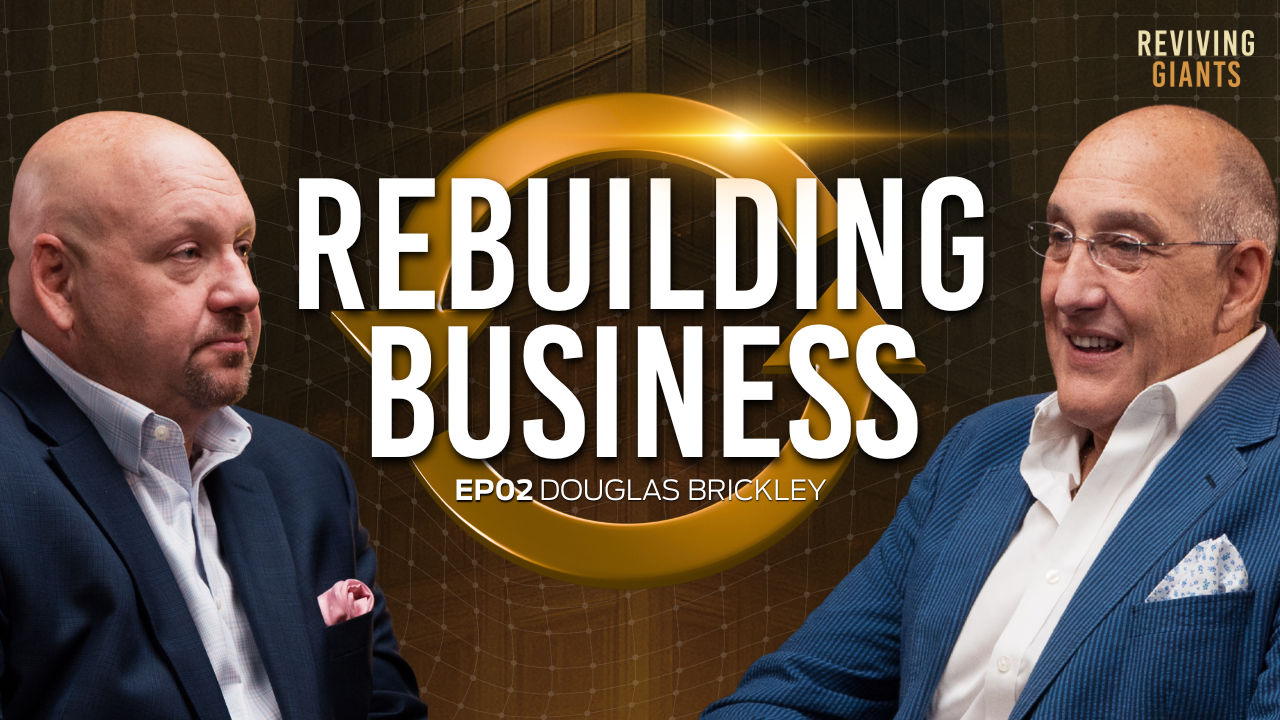
Reviving Giants’ Drew McManigle recently sat down with Doug Brickley, Managing Director at Stout, to discuss what restructuring professionals actually do — and what the public often misunderstands about the profession.
The conversation reveals an industry that looks less like traditional consulting and more like emergency medicine: high stakes, limited time, incomplete information, and decisions that cannot wait.
As Doug puts it, restructuring isn't a narrow specialty.
“It's an industry that requires you to have a lot of different skills, and be fairly deep in a lot of areas, to be able to help restructure a company that's in trouble and bring that company through to the other side.”
There Is No Single Path into Restructuring
One of the most interesting parts of the discussion is how few restructuring professionals planned to end up in the field.
Some arrive through accounting. Others come from banking, finance, operations, or executive leadership roles.
Doug began his career as an investment banker. Drew came into the profession after experiencing distress firsthand through his family's business.
Different paths. Similar destination.
What matters isn't where someone started. It's whether they can combine financial analysis, operational understanding, negotiation, and leadership into practical solutions when a company is under pressure.
As Doug explains, professionals must constantly supplement their core expertise with knowledge from other disciplines.
Because when a business is in trouble, no single skill set is enough.
The Friday Afternoon Call
Every turnaround professional has some version of the same story.
The company cannot make payroll.
The lender has stopped funding.
Liquidity is gone.
And the call almost always comes later than it should.
“It's almost always well after they should have called us,” Doug says.
“They always call too late,” Drew agrees.
That reality shapes the profession.
Restructuring professionals rarely arrive when options are plentiful. They arrive when time has run out, and stakeholders need answers immediately.
The first challenge is rarely strategy.
It's triage.
What must happen today?
What can wait until tomorrow?
What happens if nothing gets done?
The answers often determine whether a company survives long enough to execute a larger plan.
Trust Is Still the Most Valuable Asset
For all the complexity of modern restructurings, Doug repeatedly returns to a simpler principle.
Trust.
The restructuring community is relatively small. Professionals, lenders, attorneys, and advisors frequently find themselves working together across multiple matters over many years.
Reputations compound.
So do mistakes.
“You have to be a person of your word,” Doug says. “You have to deliver what you tell people you’re going to deliver.”
That means being direct about risks, realistic about outcomes, and honest when the answer isn't clear.
“If you overpromise and underdeliver to people, that generally tarnishes a reputation as far as how effective you are.”
In distressed situations, credibility often becomes the foundation for every successful negotiation.
The Metric That Matters
Many people measure restructuring success through debt reduction, financing transactions, or enterprise value preservation.
Doug measures things differently.
“I really look at it in terms of the jobs saved, and the companies restructured or saved,” Doug says. “If you think about who you're doing it for… that helps, I think, to be a good restructuring person.”
That perspective reflects something often overlooked in restructuring discussions.
Every distressed company represents employees, families, vendors, customers, and communities.
The numbers matter.
But the people affected by those numbers matter more.
And for many professionals in the industry, that's what makes the work worth doing.
Takeaways For Leaders
- Distressed situations require operational, financial, and interpersonal expertise.
- Companies almost always seek help later than they should.
- Crisis leadership begins with triage, not perfection.
- Credibility and trust remain essential negotiating tools.
- The best restructuring outcomes preserve businesses, jobs, and value.
Listen to the Full Episode
Reviving Giants is presented by MACCO Group and hosted by Drew McManigle. Through conversations with experienced operators, advisors, lenders, and restructuring professionals, the podcast explores what it really takes to navigate business distress and create a path forward.
To hear the full discussion with Doug Brickley, listen on the Reviving Giants podcast page or wherever you get your podcasts.
***
TL;DR
Restructuring professionals aren't simply financial advisors. They are crisis managers operating under pressure, often after companies have run out of time. In this episode, Doug Brickley explains why trust, adaptability, and a focus on preserving jobs are just as important as restructuring debt.

.png)