
Debt Doesn't Kill Companies — Inflexibility Does

Most companies don't fail because of a single bad quarter.
They fail because they lose the ability to adapt.
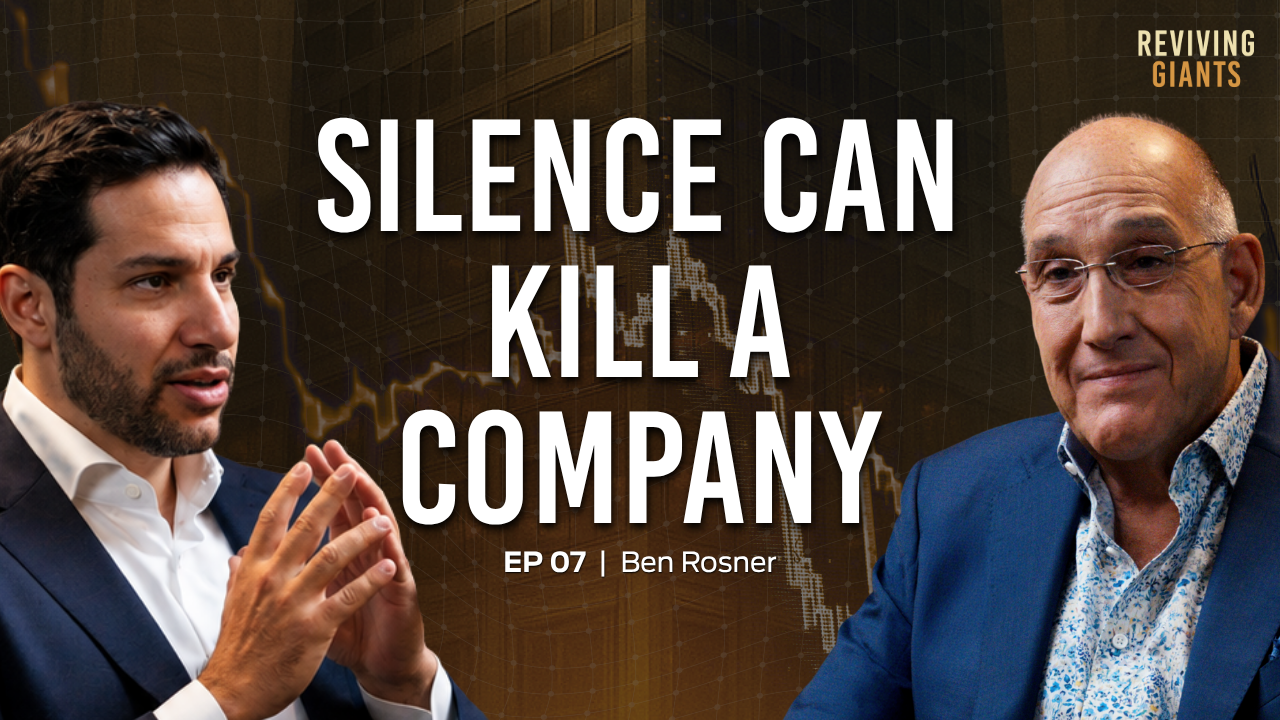
In a recent episode of Reviving Giants, Drew McManigle and advisory firm veteran Doug Brickley explored the financial realities that drive modern restructurings — from excessive business leverage and rising costs to expensive bankruptcy proceedings and changing lender dynamics.
The conversation offers a practical reminder that debt itself isn't necessarily the problem.
The problem is what debt takes away: flexibility.
When the Balance Sheet Controls the Business
Every business faces unexpected challenges.
Markets change.
Costs rise.
Customers behave differently.
New competitors emerge.
Healthy companies adapt. Overleveraged companies struggle to do so.
Doug explains that excessive debt consumes cash flow that might otherwise be used for growth, operational improvements, or responding to changing conditions.
His view of restructuring is straight forward:
“I like to have the balance sheet fit the business plan, not the other way around,” he says.
When debt obligations begin driving business decisions, the warning signs are already present.
The Cost of Going Broke
One of the more striking observations in the discussion is how expensive modern bankruptcies have become.
“You can't go broke for under a million bucks,” Drew notes.“It may be two.”
While somewhat tongue-in-cheek, the comment reflects a serious reality.
Today's Chapter 11 cases require significant planning, professional fees, liquidity support, and contingency funding.
For many middle-market businesses, the cost of restructuring itself becomes a major challenge.
As a result, more cases are resolved through asset sales, structured transactions, and expedited processes designed to preserve value while controlling expenses.
Are Businesses Being Fixed?
Drew raises a question that resonates across the restructuring industry.
"Do you think we're spending less time fixing these businesses?"
Are companies being reorganized — or simply sold?
Doug acknowledges the growing prevalence of Section 363 sales, liquidating trusts, and other transaction-driven outcomes.
While these structures can preserve value and reduce administrative costs, they don't always address the operational issues that create distress in the first place.
Doug points to one recurring problem: "They come out with still too much debt."
That's one reason some businesses find themselves back in trouble only a few years later.
A recapitalization can solve a balance sheet problem.
It cannot solve a broken business model.
Private Credit Changes the Equation
The discussion also highlights the growing influence of private credit.
Traditional banks often operate within strict regulatory frameworks, Doug says. Private credit funds have more flexibility.
“They’re typically more expensive than traditional lenders,” he notes, “but they're more flexible in what they can do. They're not regulated, right? So, they could do a lot more...creative things than your traditional banks can do.”
They can pursue ownership positions, convert debt into equity, and structure transactions that banks may avoid.
“I think that is changing how these restructurings go.”
Whether that ultimately produces better outcomes remains to be seen.
But it is clearly changing the landscape.
The Real Lesson
When businesses encounter distress, leaders often focus ondebt.
Doug's comments suggest a broader lesson.
The most valuable resource isn't capital.
It's flexibility.
Companies that preserve financial flexibility create options.
Companies that lose it eventually find themselves negotiating for survival.
Takeaways For Leaders
- Excessive business leverage limits flexibility long before a crisis emerges.
- Debt structures should support business strategy — not dictate it.
- Modern Chapter 11 cases require significant planning and liquidity.
- Asset sales can preserve value but may not fix operational problems.
- Private credit is becoming an increasingly important force in restructurings.
Listen to the Full Episode
Reviving Giants is presented by MACCO Group and hosted by Drew McManigle. The podcast features conversations with restructuring professionals, operators, lenders, and advisors who have spent their careers helping businesses navigate complex challenges.
To hear the full conversation with Doug Brickley, listen on the Reviving Giants podcast page or wherever you get your podcasts.
***
TL;DR
Doug Brickley and Drew McManigle discuss the realities of business leverage, bankruptcy costs, and modern restructuring strategies. Their central message is simple: debt isn't necessarily what causes companies to fail. Losing the flexibility to respond when conditions change is often the real problem.