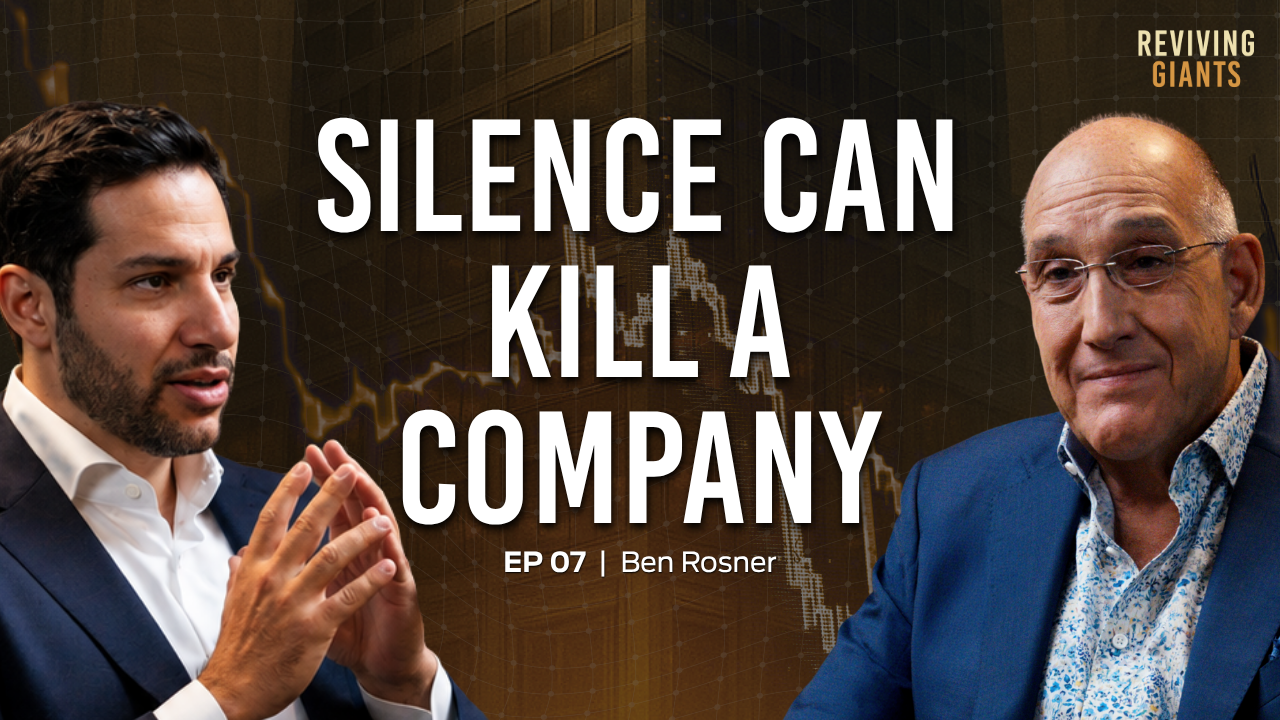

The Wild West Grows Up: From El Paso Refinery Shock to the Enron Era
The Wild West Grows Up: From El Paso Refinery Shock to the Enron Era
The collapse was only the beginning.
In Part 2 of his conversation with Berry Spears and Charlie Beckham, Drew McManigle and company travel from the 1980s crash into the cases—and courtroom moments—that helped shape what modern restructuring looks like today.
They revisit a Chapter 11 filing that unraveled in real time, a commodity-driven bankruptcy where patience mattered as much as lawyering, and a mega-case that showed just how combative—and expensive—this business could become.
“If there's one place on this planet when it comes to the law and a process that you have to play by the rules, it's the bankruptcy code,” Drew says.
A Filing So Unprepared the Court Shut It Down
The trio recalls a central story about a refinery bankruptcy that started as a reaction—and spiraled fast.
“What triggered the filing was they had big IRS leans for failure to pay excise taxes for the sale of gasoline out of the refinery,” Charlie explains. “There was an IRS agent who was very aggressive at the time who decided that he was going to file tax leans to shut down the refinery.”
“In reaction to that, the company did file Chapter 11,” Charlie continues, “But it was a completely unprepared freestyle filing reacting to the emergency of the IRS tax lates.”
“It was a complete freefall,” Berry remembers.
And the consequences were immediate.
“Judge Monroe in Austin thought things were so unorganized on the filing, [he] immediately ordered a warm shutdown of the refinery, which essentially laid off around 500 people.”
‘Call Your First Witness’—There Wasn’t One.
Berry describes the hearing that still reads like a cautionary tale: showing up in bankruptcy court expecting relief—without proof.
“Immediately the lawyer stood up and said, ‘We're here to get an order,’” Berry recalls. “And the judge just looked at me. He said, ‘Call your first witness.’ There wasn't a witness.”
“Judge Monroe was requiring evidence,” Charlie says. “He was requiring real evidence. Shocking.”
Berry puts the impact in plain terms. “Monroe denied the use of cash collateral,” he says. “It was breathtaking.”
Looking back, Berry says the takeaway was obvious. “Where's the beef? Where is the evidence? And there wasn't any.”
The Long Game: Patience, Commodities, and Timing
The pros recount a separate bankruptcy that moved at a very different pace—one where market cycles changed everything.
“I think it takes patience,” Charlie says. "The case that brings that through most for me is ASARCO.”
Charlie explains why the timeline mattered: “The ASARCO bankruptcy was filed before the amendment, so it could go on with extended exclusivity, and it did go on through four years in Chapter 11.”
And what really drove the leverage and outcome wasn’t just motions or hearings—it was the commodity curve.
Charlie says that the case required great patience—and an understanding of what happens in commodity markets. “Just like oil and gas, copper is a commodity."
“Copper prices start rising in 2005 and go up in 2006,” Charlie continues. “All of a sudden hope appears that there will be material recovery for creditors.”
But then the mood shifted—again.
“Financial crisis hit,” Charlie explains. “Copper prices plummeted downward, and all of a sudden, this great pool of cash and this great valuable company looks worthless again for the second time.”
“You had to be patient and make sure to strike when the iron was hot,” Charlie says.
The ‘Super Bowl’ Case—and What It Revealed About the Profession
For many, the mega-case of Enron marked the profession’s shift into a more corporate, high-dollar era.
“Enron was the first case where there were a billion dollars in professional fees, as far as I can remember,” Drew says.
Charlie describes the committee dynamic as something closer to warfare than collaboration.
“There were 15 initial members of the committee,” he recalls. “There were 11 pending lawsuits among creditors’ committee members against each other for Enron-related matters.”
Everyone lawyered up, Charlie says. “There was not a creditors committee member who came in without at least three of their own lawyers.”
Berry’s memory of that era is shaped by something else: where cases get filed—and why.
“My take on Enron was a little different,” he says, describing himself as “a frustrated Texas lawyer—frustrated with the fact that Enron, which was a Houston company… filed in New York.”
Balance Sheet Engineering, Lender-on-Lender Violence, and What Comes Next
As conversation turns to the present, the trio gets candid about what’s changed—and what hasn’t.
“In the late 20-teens, when so many exploration and production companies were filing Chapter 11… most of those restructurings were balance sheet. Very little was done on the business side,” Charlie says.
“That was always a mystery to me," he adds.
Berry connects the dots to today’s competitive creditor behavior, and the emergency of lender-on-lender violence.
"Capital structures have become so complex,” Charlie says, adding that it becomes a matter of: “‘How can I get ahead of that guy? I like this business. I want to own it. How do I become the party in control?’"
“It’s a result—it seems to me—of the direction that our industry had taken for a while, as opposed to actually making operational fixes to a company,” Berry adds.
Drew sums up the tension, particularly regarding businesses that are supposed to be restructured—when the industry can sometimes reward optics over operational fixes.
“I’ve always found that to be a little bit sardonic, perhaps, or cynical,” Drew says. “You know, ‘We really don't care about fixing the business as long as we can rejigger it, get paid, make it look like we have a successful result, and then go home. Oh, and by the way, I think I'll fly to Aspen this week.’”
Takeaways For Leaders
- Unprepared filings don’t buy time—they can accelerate collapse.
- Evidence, process, and planning still matter—especially when the court won’t bend.
- Commodity cycles and external shocks can reshape outcomes mid-case.
- Modern restructurings may be more sophisticated, but the core question remains: fix the business, or just rearrange claims?
Listen to the Full Episode
Reviving Giants is presented by MACCO Group and hosted by Drew McManigle, a veteran turnaround professional who brings decades of in-the-trenches restructuring experience to each conversation. To catch the entire conversation with Berry Spears and Charlie Beckham, listen to the full episode on the Reviving Giants podcast page (and wherever you get your podcasts).
***
TL;DR: Drew McManigle, Berry Spears, and Charlie Beckham jump from the crash into the cases that built the modern Chapter 11 playbook—from a refinery filing so unprepared the court shut it down, to a commodity-driven bankruptcy where timing and patience changed everything, to committee warfare of the Enron-era and today’s lender-on-lender battles. The throughline: evidence, strategy, and operational fixes still matter—even in an industry increasingly driven by complex capital structures.