
Bringing the Human Side of Bankruptcy to Light
.jpg)
For 28 years, Judge Richard Schmidt handled Chapter 11 matters from the bench in Corpus Christi as a federal bankruptcy judge for the Southern District of Texas. Along the way, he earned the nickname “the rock ’n’ roll judge”—not just for his musical side, but for a courtroom style that balanced discipline with humanity, even when the stakes were high.
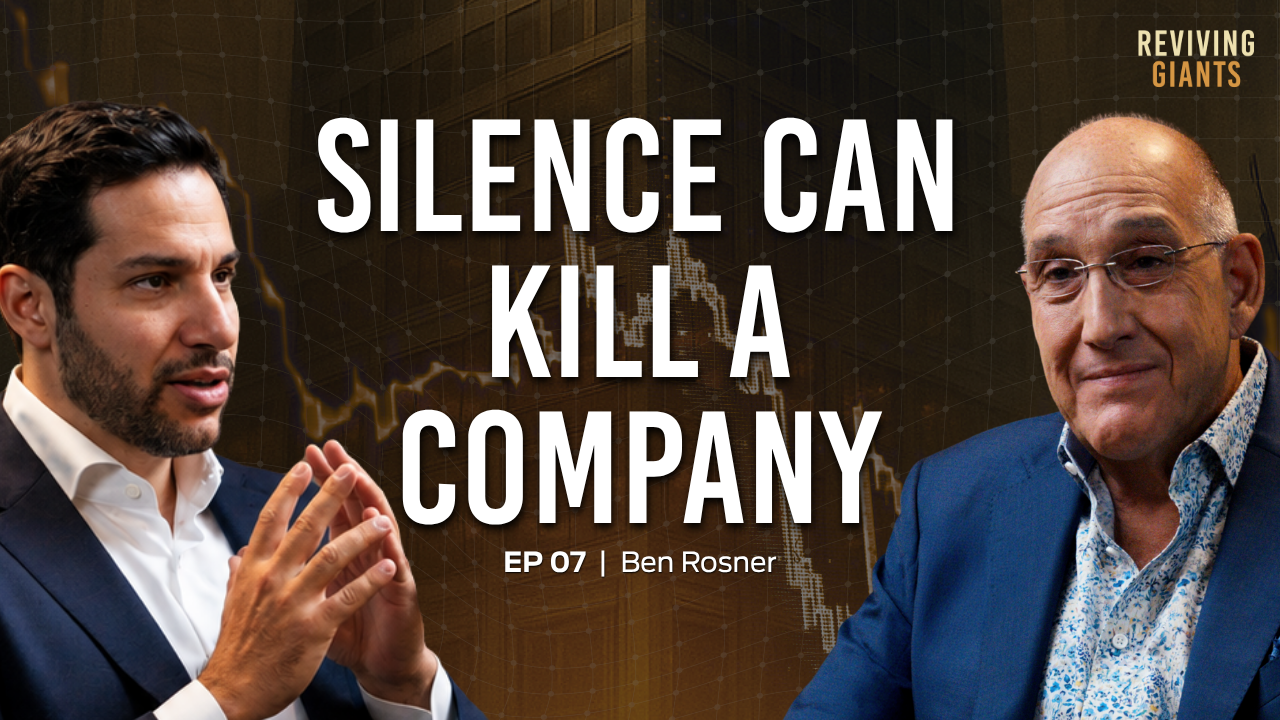
Schmidt recently sat down with turnaround expert Drew McManigle and the Reviving Giants podcast —presented by MACCO Group—to discuss the evolution of Chapter 11 and the reality behind the headlines: bankruptcy is a financial process, but it’s also profoundly human.
That human focus is central to Schmidt’s perspective. The numbers matter, of course, but outcomes are often decided by whether people can move toward a workable plan—and whether the process is run in a way that keeps everyone capable of making decisions.
When There Are 50 Sides, Someone Has to Move the Room
Distress rarely produces a clean two-party conflict. More often, it creates a crowded landscape of competing priorities. Schmidt describes the reality like this:
“I tried to work on getting all sides to a case – sometimes there are two sides, sometimes there are 50 sides – and moving all the parties towards a solution that will work and that everyone would buy into.”
It's a practical playbook: acknowledge complexity, reduce friction, and push toward a solution that can hold—because no one wins if the process collapses under its own conflict.
This wasn’t an occasional tactic, he adds. It was central to how resolutions happened.
“I think probably the vast majority of my cases were solved in that way. I mean, so I sort of mediated the cases as a judge, the judge handling it.”
A ‘Best Use of the Bankruptcy Code’ Story (No Headlines Required)
Not every meaningful restructuring story is a billion-dollar corporate drama. Schmidt should know—he presided over the high-profile Asarco bankruptcy, a landmark Chapter 11 reorganization that underscored just how complex and high-stakes major restructurings can become. Yet some of the most lasting lessons from his time on the bench came from cases that never made national headlines.
He recalls a case out of Laredo involving low-income families who bought land and improved it gradually—putting up small structures first, building over time. Environmental and infrastructure issues created liabilities that could have wiped everything out financially.
Instead, the case found a path that addressed the real-world conditions and gave people a workable way forward. Schmidt’s takeaway is striking in its simplicity:
“To me, it's probably the best use of the bankruptcy code that I could imagine,” he says.
The lesson is bigger than one case: a restructuring process can either magnify harm—or it can create breathing room for a community to stabilize.
Tone Isn't 'Soft’ — It's a Lever
In high-stress environments, tone changes behavior. When leaders escalate, disputes grow. When leaders stay controlled, the room becomes capable of problem-solving.
Schmidt describes his own disposition without dramatics:
“Well, I just happen to have a pleasant disposition, and it doesn't bother me. I mean, I don't really get upset when people say things, although they sometimes amuse me.”
He recalls a moment with a pro se litigant who capped insults and curses with the pleasantry “with all due respect.”
“I kind of chuckled, you know,” he says.
That calm isn’t cosmetic. It’s functional. A steady room makes better decisions—and better decisions are the whole point.
The Simplest Advice Is Often the Most Expensive to Ignore
Schmidt’s guidance to the next generation is not glamorous, but it’s exactly what prevents avoidable friction—advice he’s shared even with his daughter, who now practices bankruptcy law.
“I think you need to know the judge. You need to know his staff or her staff. You need to know the clerk of the court. You need to know all of the rules. And you need to follow those.”
In other words: if you want to move efficiently through a system where time equals money, do the fundamentals flawlessly.
Listen to the Full Conversation
Reviving Giants is presented by MACCO Group and hosted by Drew McManigle, a veteran turnaround professional who brings decades of in-the-trenches restructuring experience to each conversation.
To catch the entire conversation with the “Rock ’N’ Roll Judge” Richard Schmidt, listen to the full episode on the Reviving Giants podcast page (and wherever you get your podcasts).